Narrow Toronto Kitchens in Semi-Detached and Row Houses
Walk into a typical semi-detached or row house in Toronto and the kitchen often tells the same story. The footprint is long and tight, usually running along one side of the home, with just enough width for a line of cabinets and a slim walkway. These homes were built in an era when kitchens were more utilitarian and less of a social hub, and their proportions reflect that.
Today, however, families cook together, guests gather where the food is, and homeowners expect a kitchen that works as beautifully as it looks. That is where thoughtful planning for narrow Toronto kitchens becomes essential.
In a semi-detached or row house, walls and property lines dictate much of the layout. You may be sharing a wall with the neighbouring home on one or both sides, which limits window options and natural light. The room may be a galley that connects the front of the house to the back yard, making the kitchen a thoroughfare as well as a workspace. Older homes often come with structural elements that cannot be moved economically, such as masonry chimneys, boxed-in ductwork or stairwells cutting into the floor area. These constraints give the space its character, but they can also make the room feel cramped and awkward if cabinets and appliances are not carefully placed.
Standard, off-the-shelf cabinetry rarely respects these nuances. Stock cabinets come in predetermined sizes, and builders or renovators will often line them up along one wall, fill the other with a matching run, and call it a day. The result can be a Toronto semi-detached kitchen that technically offers enough storage on paper but feels tight and inefficient in daily life. Corners become dead zones, door swings collide with each other, and there is often little sense of flow from preparation to cooking to cleanup. When every inch matters, that kind of generic approach falls short.
A narrow kitchen also tends to exaggerate clutter. With long walls and limited depth, anything left on the counter or the floor interrupts the line of sight and makes the entire space feel more crowded. Recycling bins, small appliances, and even dish towels can become visual obstacles. Without cabinets designed to conceal these necessities, homeowners find themselves constantly tidying and still feeling as though the kitchen is closing in on them. The challenge is not only to add storage but to add storage that is intelligently placed and visually calm.
Despite these constraints, narrow Toronto kitchens in semi-detached and row homes have real potential. Their linear proportions are perfect for efficient work triangles when designed correctly. They often have direct access to back decks or gardens, which can be emphasized in the layout. With the right cabinet strategies, long walls become opportunities instead of problems. The key is to move beyond the idea of simply filling the room with boxes and instead think of cabinetry as a custom-fitted suit, tailored exactly to the dimensions and habits of the people who live there.
Smart Cabinet Layout Strategies for Long, Tight Spaces
The starting point for any successful row house kitchen design is a layout that respects both circulation and function. In a narrow space, the width between cabinet runs is precious. If there are cabinets on both sides, the passage in the middle must be comfortable enough for someone to cook while another person passes through, but not so wide that you lose valuable storage and counter space. Custom cabinetry allows that balance to be fine-tuned, adjusting depths and clearances so that the kitchen feels generous even when the overall dimensions are modest.
A common approach in a narrow Toronto kitchen is the classic galley layout, with cabinets and appliances on parallel walls. When handled poorly, this can feel like a tunnel. When handled well, it becomes a custom galley kitchen that Toronto homeowners rave about. The trick is to position major elements carefully. For example, the refrigerator, often the bulkiest appliance, should usually sit at one end of the run rather than in the middle, where it would create a pinch point. Dishwashers belong near the sink but not in a way that blocks access when the door is open. Ranges and cooktops need generous landing space on both sides, which means surrounding cabinets and drawers need to be arranged with real intention.
In some semi-detached kitchens, one side of the room may benefit from shallower cabinets to ease movement. Instead of full-depth base cabinets on both walls, a designer might choose standard-depth cabinets on one side for the main work zone and reduced-depth storage or tall pantries on the opposite wall. This creates a sense of openness while still providing valuable storage for pantry items, small appliances, or cleaning supplies. Custom cabinetry makes these subtle depth changes look seamless, avoiding the patched-together appearance that can happen when mixing stock pieces.
Where the kitchen opens to a dining room or living space, the end of a cabinet run becomes especially important. Boxy, abrupt finishes at the end of a counter can make the transition feel clumsy. Custom end panels, rounded edges, or a shallow display cabinet can soften that shift and give the eye a clear resting point. In some narrow Toronto kitchens, a small peninsula or an extended counter overhang at one end can serve as a breakfast bar or casual seating area, provided the remaining walkway stays comfortable. That kind of multi-purpose design helps older row homes meet modern expectations without major structural changes.
Another key decision in these homes is how to handle upper cabinets. Wall-to-wall uppers on both sides can feel oppressive in a tight kitchen, yet open shelves everywhere are not practical for most busy households. A balanced approach often works best. One wall might feature full-height upper cabinets to the ceiling, capturing maximum storage and emphasizing the vertical dimension of the room. The opposite wall might use shorter cabinets, glass fronts, or strategically placed open shelves to lighten the visual weight. By alternating solid and airy elements, the space feels less like a corridor lined with boxes and more like a thoughtfully composed room.
The placement of tall elements also matters. In a narrow layout, tall pantries and full-height fridges are essential, but too many tall blocks in the wrong places can interrupt sightlines. Grouping tall cabinets in one zone, perhaps near the entry to the kitchen, can create a strong anchor while leaving other sections more open. This approach guides the eye along the length of the room rather than stopping it abruptly, which makes the kitchen feel longer and more inviting.
Storage Solutions that Maximize Every Inch
Once the overall layout is established, the real magic in narrow kitchen cabinets Toronto homeowners love comes from what happens inside those cabinets. In a long, tight space, the difference between a frustrating kitchen and a delightful one is often measured in how well the storage systems turn awkward corners and slim gaps into hard-working assets.
Deep drawer bases are one of the most effective tools for maximizing storage in these homes. Instead of traditional lower cabinets with doors and a single shelf, drawers bring the contents out toward you, which is particularly valuable when the aisle between cabinets is narrow. Pots, pans, mixing bowls and even everyday dishes can live in sturdy, full-extension drawers where everything is visible at a glance. In older row house kitchens that may still rely on cramped cupboards, converting even part of the base cabinetry to drawers can feel life-changing.
Corner cabinets are another notorious pain point in semi-detached and row homes. The geometry of shared walls and offset rooms often leads to strange angles where standard solutions do not fit well. Custom cabinetry can introduce specialized hardware such as rotating trays or pull-out mechanisms designed to use that deep, hidden space efficiently. With the right system, the back corner of a cabinet becomes a smooth glide away instead of a black hole that swallows rarely used items.
Vertical storage is essential in these tall, narrow houses. Many Toronto semi-detached kitchens have reasonable ceiling height but cabinets that fall short, leaving an unused strip at the top. Custom full-height cabinets or stacked upper units take advantage of that space for infrequently used items such as holiday platters, canning supplies or backup pantry stock. Even above a refrigerator, a well-designed cabinet can hold more than the usual jumble of forgotten containers. Because these homes often lack basements or large pantries that are easy to access from the kitchen, every bit of extra height counts.
Slim spaces deserve just as much attention. That narrow gap between a cabinet and a wall can become a pull-out pantry perfect for canned goods, spices, or baking ingredients. A shallow run of cabinetry along one wall can house tray dividers for baking sheets, tall bottles or cutting boards. Under the sink, custom pull-outs and U-shaped drawers can work around plumbing rather than surrendering to it, creating tidy homes for cleaning products and dishwashing supplies without the typical clutter.
Appliance and waste storage need to be considered carefully in narrow kitchens. Countertop appliances can quickly overwhelm a long but shallow room, making it feel perpetually crowded. Custom cabinets can incorporate appliance garages, where toasters, coffee machines and blenders sit ready to use behind lift-up or retracting doors. Drawers can be sized for specific tools like stand mixers or food processors. Waste and recycling can be tucked into dedicated pull-out units that handle multiple streams, which is especially useful in Toronto where recycling and green bin programs are standard.
Even details like cutlery and utensil storage deserve thought. In a space where every drawer is precious, tiered organizers, diagonal layouts for longer tools, and inserts customized to what you actually own can dramatically increase capacity. Tall cabinets can hide broom closets or stacked pull-out units for pantry goods, eliminating the need for freestanding racks that eat up floor area. When storage is designed from the inside out rather than bolted on as an afterthought, the kitchen begins to work with you instead of against you.
Designing for Light, Flow, and Real Life in Narrow Homes
Functionality is only part of the equation. Narrow Toronto kitchens in semi-detached and row houses also need to feel pleasant to be in, which means paying attention to light, proportion and the reality of daily living. Cabinet choices have a huge influence on all of these, especially in homes where the kitchen may only have one small window or must borrow light from adjacent rooms.
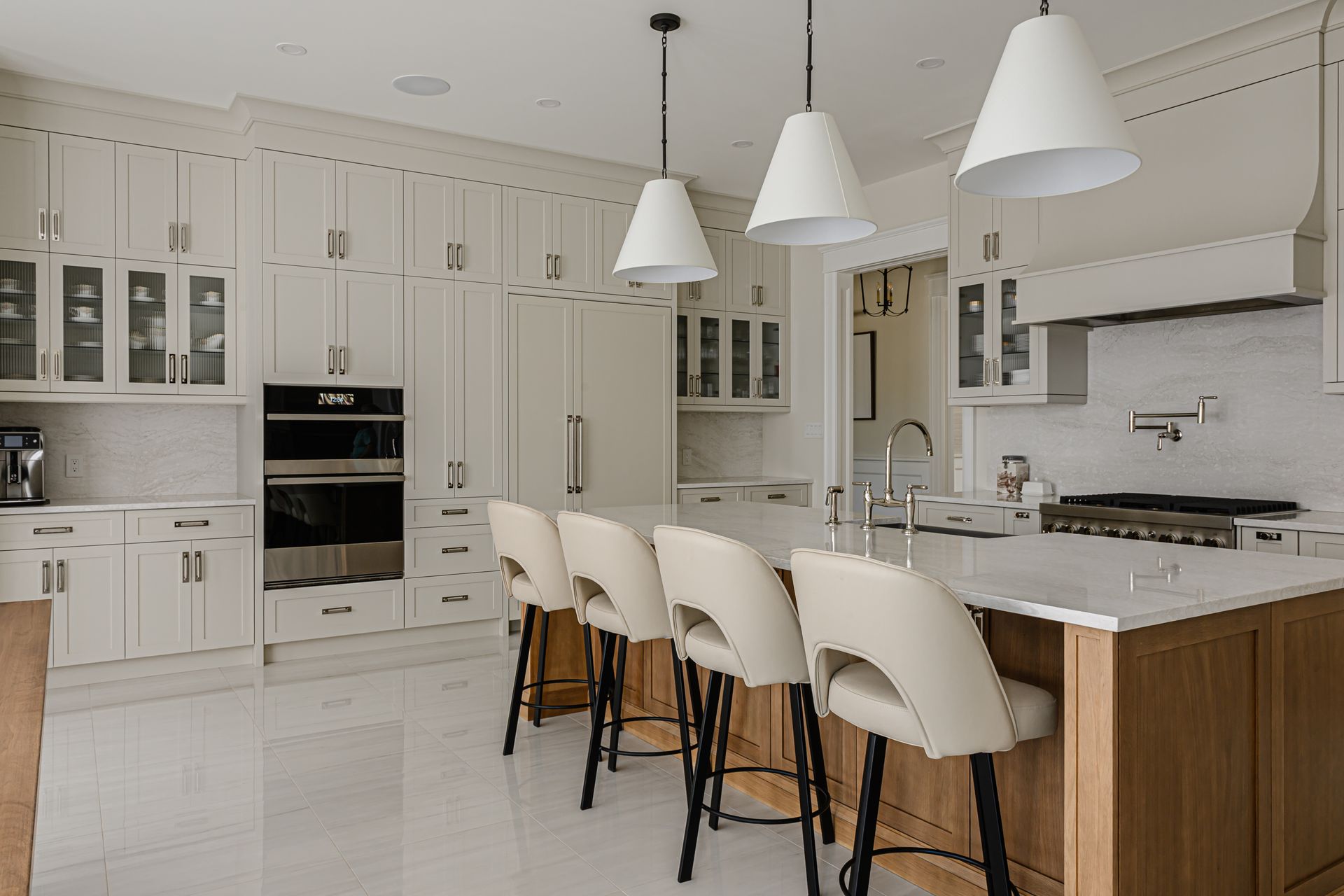
Colour and finish play a key role. Lighter cabinet colours, especially on upper cabinets, help bounce natural and artificial light around the room, making the space feel more open. In some row house kitchen designs, a two-tone approach works beautifully, with slightly darker base cabinets grounding the room and lighter uppers keeping the sightlines airy. Wood finishes can introduce warmth and character, particularly in older Toronto homes with original trim and floors, but they need to be balanced so they do not overwhelm the space. Custom cabinetry allows you to fine-tune this mix instead of accepting whatever limited palette comes with stock cabinets.
Cabinet style matters too. In tight kitchens, overly ornate doors and heavy mouldings can make walls feel closer than they are. Simple profiles, clean lines, and carefully scaled details keep the room from feeling busy. That does not mean the space must be cold or minimal; subtle paneling, interesting hardware, and thoughtful use of glass can add personality without visual clutter. For example, a few glass-front cabinets on the least congested wall might showcase favourite dishes and reflect light, while solid doors elsewhere conceal everyday items.
Lighting and cabinets should be planned together. Under-cabinet lighting is critical in a narrow kitchen, where overhead fixtures alone can cast shadows on work surfaces. Integrated lighting beneath upper cabinets brightens counters, makes tasks easier, and visually stretches the length of the room. Interior cabinet lighting in select glass-front units can create a gentle glow that doubles as evening ambience. When these elements are built into the cabinet design, wires and fixtures are neatly hidden, preserving the clean lines of the kitchen.
Flow between the kitchen and other rooms is another important consideration. In many Toronto semi-detached homes, the kitchen connects directly to a dining room or family room. Cabinets placed at these transitions should support how you actually use the spaces. A run of base cabinets near the dining room might be designed as a sideboard for serving and storage of table linens and dishes. Cabinets near a back entrance might incorporate a small mudroom function, with hooks, cubbies or drawers for keys and bags, all integrated in a way that feels consistent with the kitchen design.
Real life in these homes also includes families, pets, and tight schedules. Durable cabinet finishes, soft-close hardware, and easily cleaned surfaces are not luxuries; they are basics. Narrow kitchens are high-traffic zones, and doors and drawers are opened constantly as people squeeze past one another. Quality construction keeps everything feeling solid despite this use. Thoughtful cabinet placement can also help avoid collisions, such as keeping frequently used drawers away from the tightest parts of the room or designing trash pull-outs so they do not block access to the sink when open.
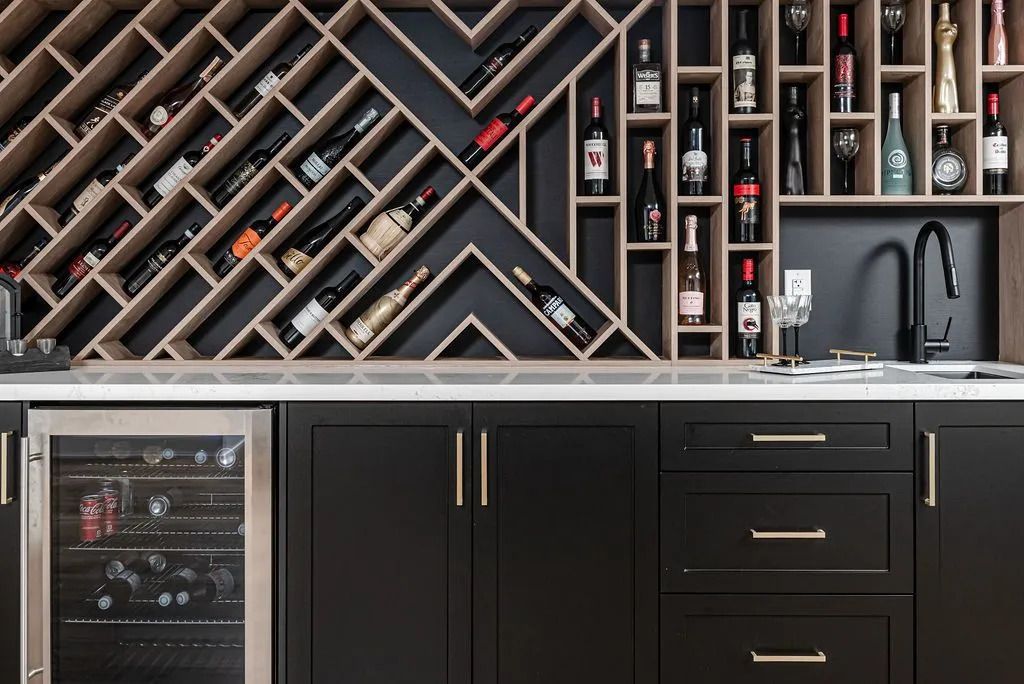
Finally, every narrow kitchen benefits from a few touches that bring joy to everyday routines. A custom coffee station with dedicated storage for mugs and beans can turn a small corner into a morning ritual. A slim open shelf for cookbooks, a built-in wine rack at the end of a cabinet run, or a display nook for favourite pottery gives the room personality beyond its efficiency. When cabinet layouts are smart and tailored to the unique proportions of Toronto’s semi-detached and row homes, these kitchens become far more than passageways. They become the heart of the house, perfectly fitted to the long, narrow spaces that give these homes their charm.